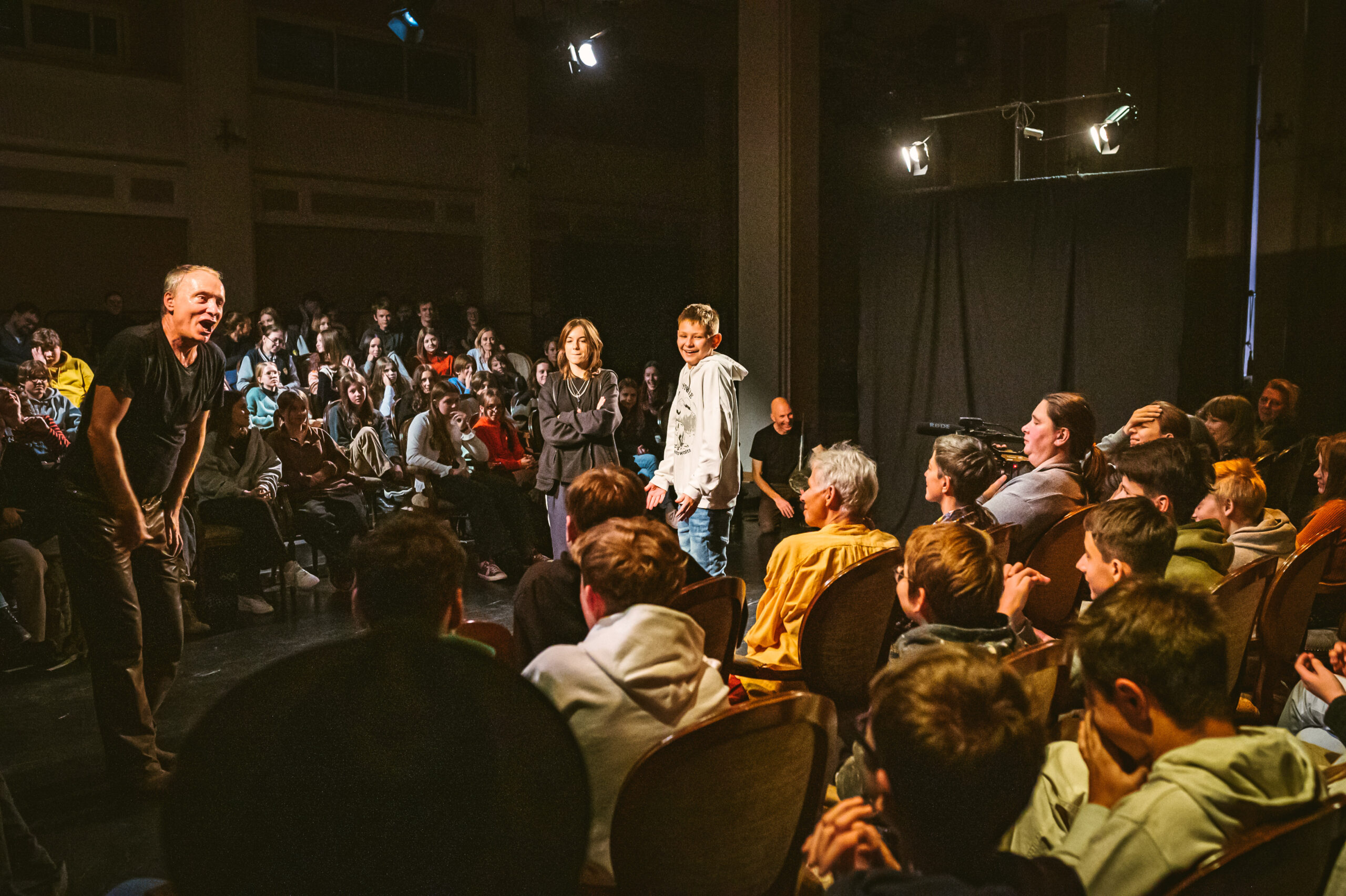


Audience Participation with Voice-Based Audio Interpretation
How can audience voices be incorporated artistically as performers who convey mood in narrative theater? How does the storyteller act to facilitate voice-based sound improvisations as a mood-setting element in a performance?
The dramaturgy of this version of the 4,000-year-old Gilgamesh views the character of Gilgamesh, King of Uruk, as a detoxification process for toxic masculinity. There is hope that the collective expression, represented by the citizens of Uruk’s lament, will be heard on a higher plane. This motivates the events that cause Gilgamesh to turn away from his abusive behavior and venture into the layers of universal human emotion that had been hidden from him. After crossing the Waters of Death, without succeeding in escaping death, he gains self-insight and acceptance of human life, and returns home with a new sense of balance and respect for the sensitivity of the collective being.
THE TEAM BEHIND
Jesper la Cour. The Narrative Theater
Documentary filmmaker Jonas Stenfatt: photography, audio recording, and interviews
: 2 fourth-grade classes. School students